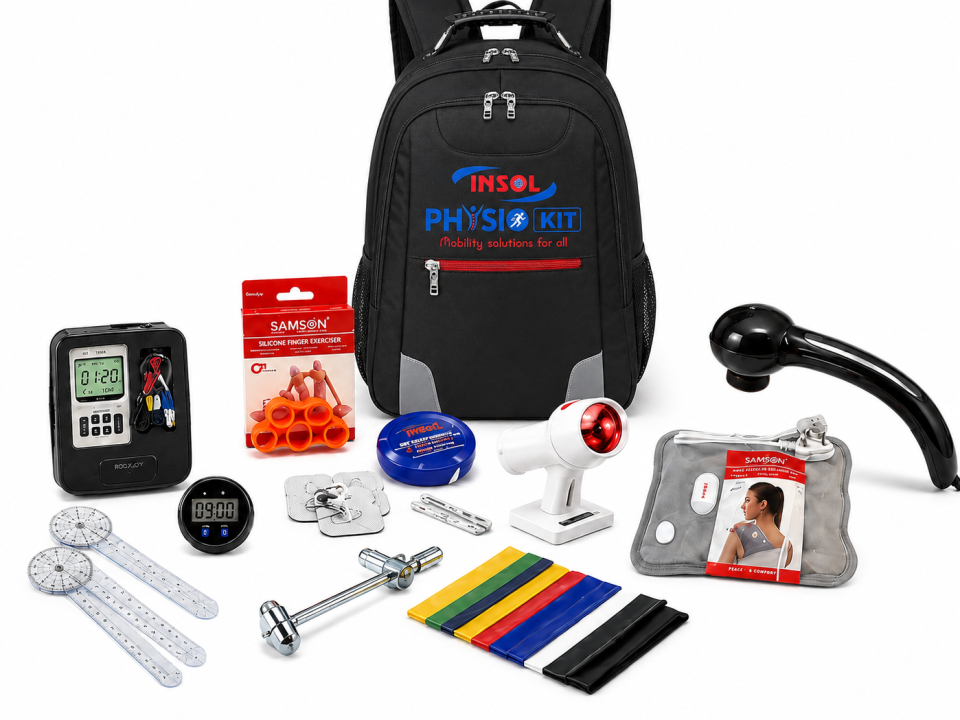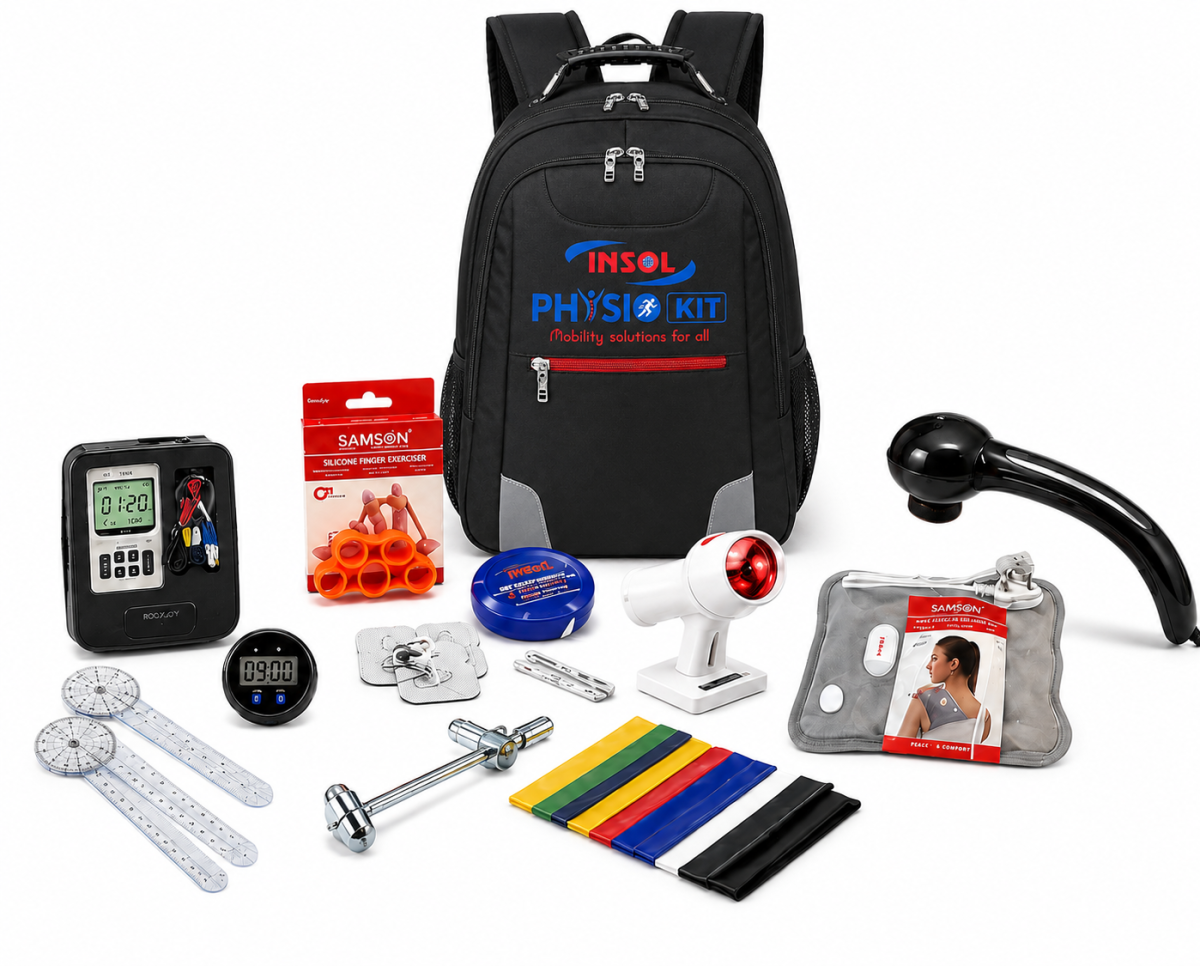

Meet the Insol Physio Kit: 11 Essentials (Plus the Perfect Travel Bag)
August 1, 2026
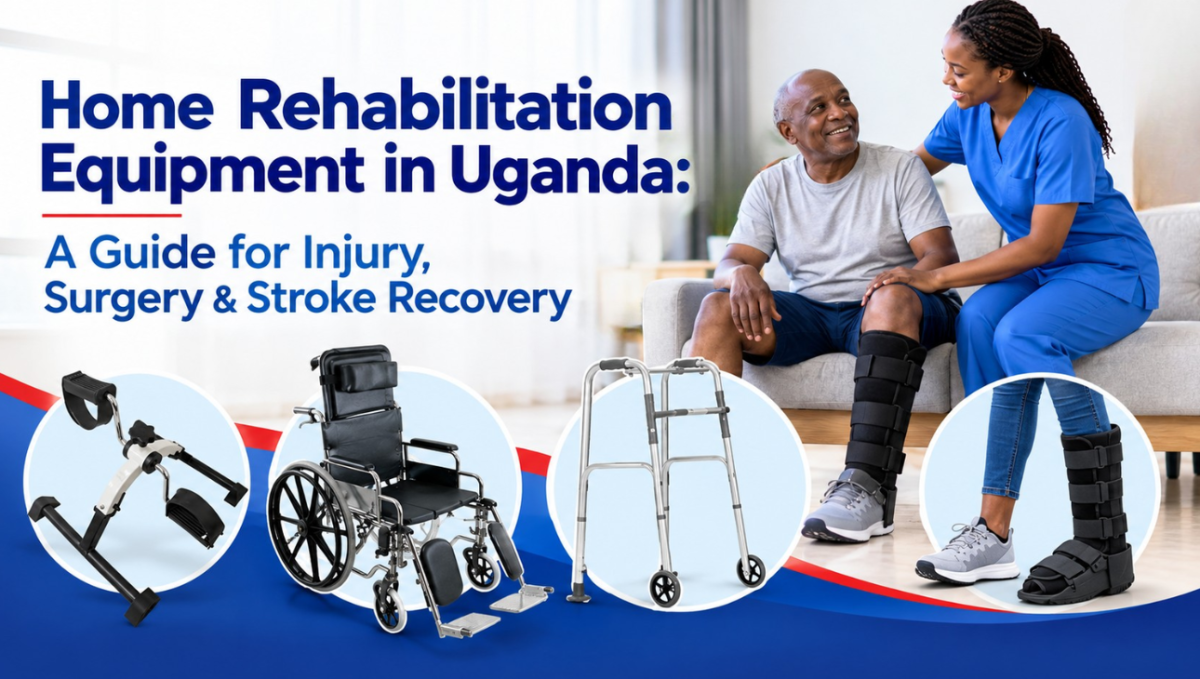
Recovering from an injury, surgery, or stroke takes time, patience, and the right support. While physiotherapy and other rehabilitation services are important, much of the recovery process continues at home.
The right home rehabilitation equipment can help a person continue prescribed exercises, practice movement, improve strength, and work towards greater independence.
At INS Orthotics Limited (INSOL), we provide orthopedic, mobility, physiotherapy, and rehabilitation products to support recovery at home and in clinical settings.
Why Home Rehabilitation Equipment Matters
Rehabilitation does not only happen in a hospital or physiotherapy clinic.
Depending on a person’s condition, home rehabilitation equipment can support:
- Strengthening and exercise
- Balance and walking practice
- Hand and finger exercises
- Mobility and positioning
- Greater independence in daily activities
The goal is not to have every rehabilitation product available. It is to choose equipment that matches the person’s condition, abilities, and rehabilitation goals.
Stroke Rehabilitation Equipment
Stroke may affect strength, balance, coordination, walking, and hand function. Rehabilitation equipment can support continued practice and mobility at home.
Wheelchairs
A wheelchair can provide safe mobility for someone who cannot walk independently or becomes easily fatigued.
When choosing one, consider the user’s size, posture, mobility level, home environment, and whether they will propel the wheelchair themselves or require assistance.
Walking Frames & Walking Aids
Walking frames provide additional stability for people experiencing weakness or poor balance.
Depending on the person’s progress, other options such as tripod and quadripod walking sticks may also provide support.
The appropriate walking aid depends on the person’s balance, strength, coordination, and walking ability. Correct height and proper use are also important.
Foot Drop Splints & AFOs
Foot drop can make it difficult to lift the front of the foot while walking, causing the toes to drag.
A foot drop splint, or Ankle Foot Orthosis (AFO), can help support the position of the foot and ankle during standing and walking.
Proper assessment and fitting are important because the appropriate design depends on the person’s walking pattern, strength, footwear, and individual needs.
Hand Rehabilitation Equipment
Stroke can also affect hand and finger movement.
Products such as stroke rehabilitation gloves, hand exercisers, and exercise balls may be incorporated into rehabilitation to practise finger movement, grip, and hand coordination.
The exercises and level of resistance should match the person’s current ability.
Pedal & Exercise Equipment
Pedal exercisers and physiotherapy balls can support repetitive movement and different rehabilitation exercises.
Depending on the person’s abilities and professional guidance, they may be used for activities involving strength, balance, coordination, posture, and controlled movement.
Rehabilitation Equipment After Surgery
Recovery after surgery usually happens in stages.
Initially, the focus may be on protecting the surgical area and controlling movement. As recovery progresses, rehabilitation may shift towards improving mobility, strength, and function.
Useful equipment may include:
For example, someone recovering from knee or hip surgery may require mobility support, while someone recovering from shoulder surgery may use equipment for controlled movement and strengthening.
Resistance Bands & Exercise Mats
Resistance bands are lightweight, portable, and available in different resistance levels. They can be incorporated into strengthening exercises as recovery progresses.
An exercise mat provides a comfortable surface for stretching, strengthening, and mobility exercises at home.
Exercises should be appropriate for the person’s stage of recovery. More resistance is not always better while joints and tissues are still healing.
Rehabilitation Equipment for Injuries
Injuries can affect muscles, joints, bones, ligaments, and other tissues.
Depending on the injury and stage of recovery, rehabilitation equipment may include resistance bands, exercise balls, walking aids, wheelchairs, knee supports, ankle supports, splints, braces, and back supports.
The right equipment depends on the type and severity of the injury and the person’s rehabilitation goals.
How to Choose Rehabilitation Equipment in Uganda
Before purchasing rehabilitation equipment, consider these five important factors:
1. Understand the person’s needs
Are they working on walking, strength, hand function, balance, mobility, or independence?
2. Seek professional guidance.
A physiotherapist, occupational therapist, orthotist, prosthetist, or doctor can help determine which equipment is appropriate, particularly for wheelchairs, walking aids, splints, and orthoses.
3. Get the correct size and fit
Wheelchairs, walking frames, braces, and splints should fit the user appropriately.
4. Consider the home environment.
Think about available space, doorways, corridors, and where the equipment will be used.
5. Keep it practical.
Choose equipment the person can use appropriately and incorporate into their rehabilitation routine.
Finding Rehabilitation Equipment in Uganda
The right rehabilitation equipment should support the person’s needs rather than simply provide more equipment.
INS Orthotics Limited (INSOL) provides a range of rehabilitation solutions, including:
- Wheelchairs and mobility aids
- Walking frames and walking sticks
- AFOs and foot drop splints
- Orthopaedic braces and supports
- Physiotherapy and exercise equipment
- Hand rehabilitation products
Our team can also provide guidance when selecting products according to individual needs.
Need Help Choosing Rehabilitation Equipment?
Explore our range of orthopedic, mobility, physiotherapy, and rehabilitation products, or contact the INSOL team for assistance in selecting an appropriate solution.
INS Orthotics Limited
Mobility Solutions for All.